This Miami-based Trust Wants to Give You Over $50K. Here's How You Can Qualify.

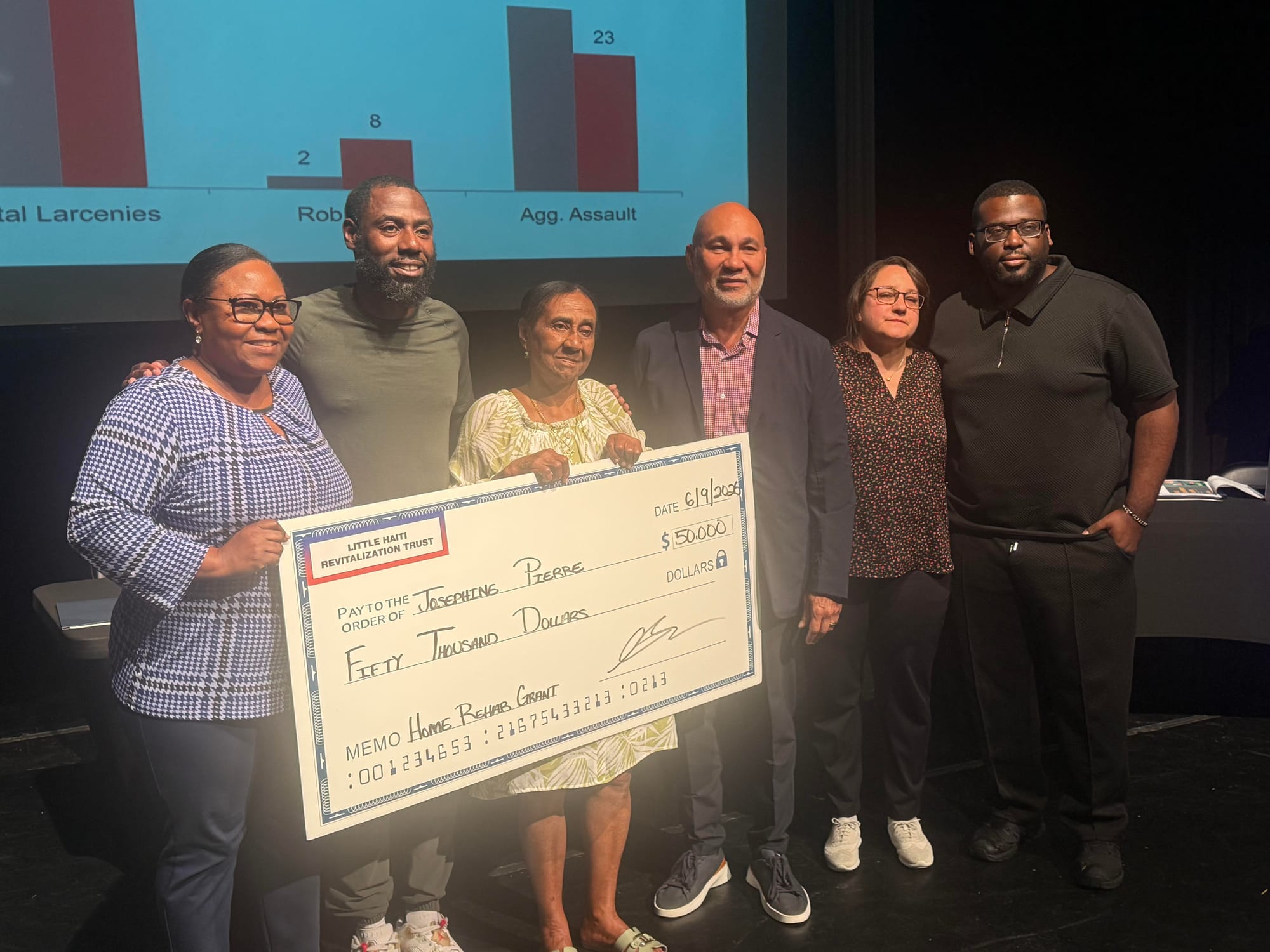
For years, Marjorie Pierre’s mother, Josephine, has lived in a Little Haiti home that desperately needed repairs. Now, after receiving $50,000 through the Little Haiti Revitalization Trust Home Rehabilitation Program, the family said the house has been given a facelift.
“It helped a lot,” Pierre said. “We’re very satisfied with the process.”
The Trust Home Rehabilitation Program provides a 10-year forgivable loan.
Marjorie said the money helped cover major repairs, including plumbing underneath the house, electrical upgrades, and a new air conditioning system. Pierre said the work focused on fixing the most urgent problems in her mother’s home rather than cosmetic improvements.
“The bulk of the work that needed to be done was done,” Pierre said.
At a recent board meeting, the Trust presented Pierre’s family with the rehabilitation check totaling approximately $50,000. The forgivable loan program at during the same meeting increased from $50,000 to $100,000, with requests exceeding $75,000 requiring approval by the Trust Board.
So far, two families have received funding through the program.
Joann Milord, president and CEO of Little Haiti Revitalization Trust, said that applicants are first encouraged to apply for the City of Miami's Single Family Home Rehabilitation Program, which provides assistance of up to $150,000.
"This ensures residents have the opportunity to access the largest available funding source before being considered for the Trust Program," the Trust wrote in an email.
The program is able to provide assistance to for additional property types, including townhomes and duplexes, whereas the City's program is limited to single-family homes, the Trust also wrote in an email.
The City's program serves households up to 80% of the Area Median Income (AMI), while the Trust program expands eligibility to households earning up to 120% AMI, allowing additional residents to qualify for assistance.
Pierre's mother purchased the home in 1973 when the neighborhood was known as Lemon City, which was renamed Little Haiti a decade ago.
“We were the second African American family living in the neighborhood,” Pierre said. “This neighborhood has come a long way. But it is sad because the neighborhood just looks so blight.”
Pierre said she's happy to see the city getting more involved. She said she only knows a handful of owners in the area and can only name two owners in her mother’s neighborhood. A lot of the properties are vacant and not being maintained, she added.
Her mother’s house only had one owner before her and was abandoned for years before she bought the property. All that time that it was vacant contributed to the issues she's had with the eroded state of the house’s pipes. That’s when they decided to look for options to help cover the repairs.
Pierre said the process to apply for the Trust’s grant program moved quicker than her family expected.
“From the application to the approval, I would say at least a month, a month and a half,” she said.
Pierre said staff from the City and the Trust clearly explained each step of the application process. Their guidance helped her mother navigate a process that can be difficult for elderly homeowners to complete on their own, Pierre said.
“My mother being older, (she’s) not really familiar with how government programs work,” Pierre said.
Pierre estimated the funding covers “at least 50-60%” of the home’s total rehabilitation costs, which was the remaining amount after having another government program cover the first half of the costs.
Pierre said her family only learned about the opportunity after a City of Miami employee referred them to the program.
“I'm glad that the local government, the city, knows about it where they can tell residents who live in the area, ‘Hey, you know, you can do this,’" Pierre said.
Pierre said she hopes more homeowners in the neighborhood become aware of the program before the remaining funding is exhausted.
The forgivable loan comes as the neighborhood’s housing market has changed significantly over the past decade. According to data from Zillow cited by The New York Times, the average home value in Little Haiti increased from $58,403 in April 2012 to $482,557 in April 2023.
The program is only available to homeowners, limiting who can apply for assistance. According to Homes.com neighborhood data, about 25% of Little Haiti residents own their homes, while the majority are renters. For homeowners who qualify, the rehabilitation program provides funding for repairs that may otherwise be difficult to afford.
Milord, president and CEO of the Trust, said the organization is focused on ensuring eligible homeowners are aware of the available funding.
“We have a pot of money,” Milord said. “Until the funds are exhausted, we're still accepting applications.”
Email the LHRT Home Rehabilitation Program at LHRT@miamigiv.com or call 305-960-2964 for more information.
This article has been updated for accuracy.
Comments ()